
What Happens When You Take Writing Away From Writers?
A newspaper editor removed writing from reporters' jobs. The backlash reveals a deeper question about AI in knowledge work.
A newspaper editor removed writing from reporters' jobs. The backlash reveals a deeper question about AI in knowledge work.

This is the most expensive mistake in strategic communications: implementing solutions without understanding the problem first.
Most organizations commission research, generate insights, then make decisions based on gut instinct anyway.
A newspaper editor removed writing from reporters' jobs. The backlash reveals a deeper question about AI in knowledge work.

Last week, Chris Quinn, the editor of Cleveland.com and The Plain Dealer, published a column that set off one of the fiercest industry debates in recent memory. A recent college graduate had withdrawn from a reporting position at his newsroom because of how the paper uses artificial intelligence. Quinn's response was blunt: the student had been failed by their journalism program, which taught them to fear AI rather than use it.
In the piece, Quinn didn't just defend AI as a supplementary tool. He described a workflow where reporters do zero writing. They gather information, conduct interviews, build sources and then an "AI rewrite specialist" turns their material into story drafts. Editors review everything. Reporters get final approval. But the actual prose? That's the machine's job.
The backlash was immediate. The American Press Institute called out the argument as anecdotal and full of unsupported generalizations. Journalists on social media were sharply critical, with Washington Post reporter Jeremy Barr saying he'd "seriously question working for someone like" Quinn. Dan Kennedy, a Northeastern journalism professor, wrote a detailed rebuttal acknowledging AI's usefulness while pushing back on the idea that writing can simply be subtracted from reporting.
So, I'll add another take to the conversation. The question "Is AI good or bad for journalism?" is the wrong conversation. The real question is more specific and more strategic: which parts of journalism can AI handle, and which parts does it fundamentally break if you hand them over?
Quinn is right about the direction of travel. AI is not optional for newsrooms anymore. According to the Reuters Institute's 2025 trends report, 87% of media leaders said their newsrooms were being transformed by generative AI. The 2026 forecast from Reuters predicts newsrooms will increasingly use agentic AI for end-to-end automation of complex workflows, not just individual tasks, but entire production chains.
His argument that the irreplaceable part of journalism is the reporting, not the writing has real merit. His reporters in Lorain County are covering communities that had no local coverage at all. They're sitting across from sources at coffee shops, attending county commission meetings, building trust. That's work AI genuinely cannot do. In a job market where Press Gazette tracked thousands of journalism layoffs in 2025 alone, and the Washington Post just cut a third of its newsroom, the ability to cover more ground with fewer people is a survival strategy.
But Quinn's argument has a serious blind spot, and it's one that should matter to anyone thinking about how to implement AI in a knowledge-work organization.
The cognitive process theory of writing, developed by researchers Linda Flower and John R. Hayes, established decades ago that writing is not the transcription of pre-formed thoughts, basically that it's where thoughts actually get formed. The act of drafting a story is where a reporter discovers they don't have a source nailed down, where contradictions surface, where the real lede reveals itself. As API executive director Robyn Tomlin put it: "Writing is how journalists test their thinking and surface gaps in their reporting."
When you remove writing from a reporter's process entirely, you're removing a cognitive feedback loop. Early-career reporters especially need that loop because it's how they develop editorial judgment, learn to structure narratives, and figure out what questions they didn't ask. You can fact-check an AI draft for accuracy. You can't fact-check it for the story the reporter would have realized they were missing if they'd written it themselves.
What Quinn has actually done, whether he frames it this way or not, is unbundle the journalist's role. Reporting, writing, editing, fact-checking, source development: these have traditionally been lumped together as one job. AI is forcing newsrooms to treat them as separable functions. That's a legitimate organizational shift. But it requires strategic thinking about what you preserve and what you delegate.
Tomlin nailed the key test: "News leaders should strive to make a compelling case to readers for how the use of AI improves the journalism they receive. Simply saying it frees up time does not show how AI meaningfully improves accuracy, depth or trust. Efficiency alone is not a journalistic value."
This applies far beyond newsrooms. Every organization adopting AI faces the same question: are you automating the output or are you automating away the thinking that made the output good? The answer determines whether AI makes your team faster or makes your team worse at their jobs without realizing it.
According to a Reuters Institute survey on public attitudes toward AI in news, only 21% of people are comfortable with AI-generated news that has some human oversight, and just 12% are comfortable with news made entirely by AI. Meanwhile, 62% are comfortable with news made entirely by a human journalist. Newsrooms, and any organization communicating with a public audience need to account for it.
We don't need to choose between "AI is bad" and "AI replaces writing." It needs a more honest framework: AI can handle production. It cannot replace cognition.
Quinn's column is a useful provocation, even if it oversimplifies. The future journalist probably does spend more time reporting and less time writing than their predecessor. But "less time writing" is very different from "no writing at all." Newsrooms and any organization integrating AI into knowledge work need to ask a harder question than "what can AI do?" They need to ask: "what are we losing when we stop doing it ourselves?"
 Adriana Lacy Consulting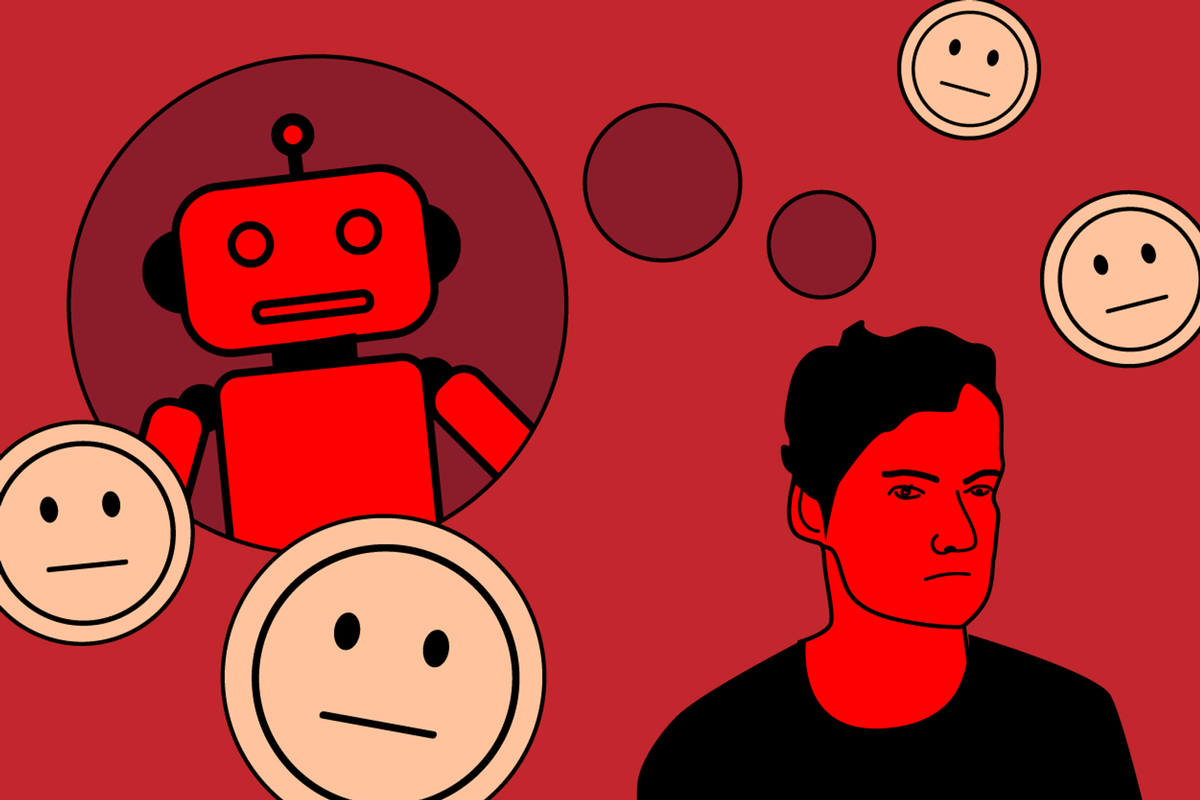
 Adriana Lacy
 Jamie Essick
📊 Pew Research Center found that 57% of Americans express low confidence in journalists to act in the best interests of the public, with Democrats more than twice as likely as Republicans to express confidence, underscoring how trust repair has become a core communications challenge for newsrooms.
📈 Pew Research Center released a new report showing that 30% of U.S. adults get news from email newsletters at least sometimes but 62% of subscribers don't read most of the newsletters they receive, a reality check for anyone banking on email as a distribution strategy without investing in content quality.
🔍 The American Press Institute responded to the Cleveland Plain Dealer controversy, with executive director Robyn Tomlin arguing that efficiency alone is not a journalistic value and that newsroom leaders need to make a compelling case for how AI improves the journalism audiences receive, not just the workflow behind it.
🎯 Press Gazette is tracking journalism job cuts in 2026, with the Washington Post cutting a third of its staff, the Atlanta Journal-Constitution slashing 15%, and layoffs hitting the Wall Street Journal, Politico, and Vox Media, continuing a trend that saw at least 3,434 journalism jobs cut in 2025 alone.
📡 MIT researchers found that leading AI chatbots provide less accurate information to vulnerable users, including those with lower English proficiency and less formal education raising critical equity questions for any organization using AI to serve diverse audiences.

Most organizations commission research, generate insights, then make decisions based on gut instinct anyway.

Journalism's obsession with scale was a dead end. The future belongs to newsrooms that measure relationships, not just reach.

In the age of AI-driven zero-click searches, success is no longer measured by clicks but by visibility, brand recognition, and the ability to influence without a visit.

The arrival of AI tools like ChatGPT, Midjourney, Runway, and Adobe Firefly has stirred excitement, anxiety, and endless speculation. Will machines replace writers, designers, and artists? Or is something else happening entirely?